
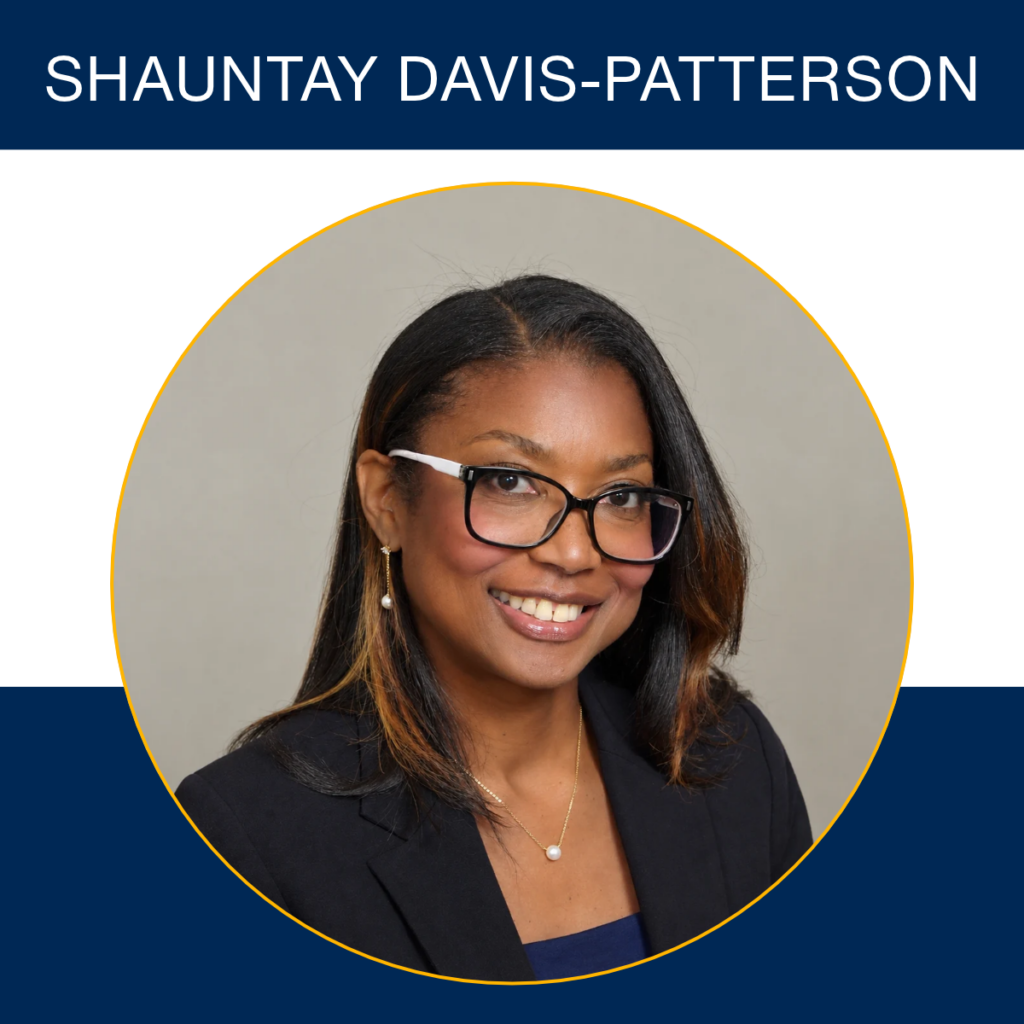
 NACDD is pleased to feature Shauntay Davis-Patterson this month and celebrate the work she has done in cancer prevention and control. Shauntay’s path to public health began with a deeply personal experience, and today her work brings partners together to advance earlier detection, improve outcomes, and support communities across California.
What inspired you to work in this area of public health/chronic disease prevention?
I thought I wanted to be a teacher when I entered Sacramento State University. In my second year, when I was 19 years old, I was diagnosed with systemic lupus, which changed the trajectory of my life, and my career. As I conducted research about this disease I never heard of but now had to contend with, my interest was piqued to study public health. I changed my major to Health Science and focused on community health education. Public health has been my passion ever since.
What is one accomplishment or initiative you’re especially proud of in your current role?
I helped lead our partnership with our coalition, the California Dialogue on Cancer (CDOC), the California Colorectal Cancer Coalition (C4), and the American Cancer Society (ACS), to elevate colorectal cancer (CRC) screening into a required Medi-Cal (Medicaid) quality measure. Our work began in 2017, and after years of work, C4, our coalition, and national partners secured CRC screening’s inclusion in the CMS Adult Core Set, laying the groundwork for California. By 2022, CRC screening was formally added to the Medi‑Cal Managed Care Accountability Set (MCAS), creating a path for enforcement.
After the measure was adopted, our Comp Cancer and coalition team worked closely with the Department of Health Care Services (DHCS) to address barriers, share evidence‑based strategies, and support planning for minimum performance level requirements among Medi-Cal health plans. To help plans prepare for 2025–2026 enforcement, we launched statewide supports, including a CRC screening webinar, ongoing technical assistance, and the California Health Plan CRC Screening Learning Collaborative, along with the CRC Screening Resource Hub.
As a result of this coordinated effort, Medi‑Cal’s CRC screening rate has already increased—from the high 30s in 2022 to over 44% by 2024, now exceeding national Medicaid averages.
How does your work make a difference for people or communities you serve?
My work makes a difference because I bring partners together who are all focused on one thing—reducing the cancer burden in our state. In my role, I help convene and connect people, programs, and organizations so they can collaborate, share solutions, and make real progress. I also support partners in using the State Cancer Plan to guide their goals and strategies, which strengthens efforts to increase screening, improve survivorship outcomes, and raise awareness across communities. At its core, my role helps turn collaboration into impact, so Californians can experience better cancer prevention, earlier detection, and stronger support across the cancer journey.
What is one priority or focus area you’re currently working on?
We focus on several, but increasing colorectal cancer screening and HPV vaccination rates are two that rise to the top for our coalition.
What motivates you to continue this work?
I’m motivated by this work because of the many cancer survivors, caregivers, and deeply committed partners in our coalition. Their passion, and the countless hours volunteers give, reminds me every day why this work matters and why I’m proud to be part of it.
What’s one thing that others might not realize about the impact of your field?
One thing people might not realize about the impact of my field is how much of our progress comes from bringing the right partners together. Cancer control isn’t just programs and data—it’s statewide collaboration. When we convene health systems, community organizations, researchers, advocates, and survivors, those relationships directly shape prevention, early detection, treatment, and survivorship outcomes across California. Our coalition work, guided by the State Cancer Plan, helps turn shared priorities into real changes that reduce disparities, expand access, and improve the health of entire communities.
What do you value about your NACDD membership?
I value my NACDD membership because it gives me access to a national network of chronic disease professionals and tools that strengthen my work in cancer prevention and control. NACDD provides high‑quality professional development resources that help me stay current and effective in my role. Engaging with the Cancer Council makes it easy to connect with peers, share ideas, and learn from others across the country—all of which enhances the impact of my work here in California.
Anything else you would like to share that helps to tell your story or advice for new public health professionals?
My passion for public health comes from a deeply personal place. Living with a chronic illness pushed me early in my journey to understand health beyond the clinical setting. Therefore, I pursued as many opportunities as possible that exposed me to leaning about public health. I was also very determined not to let lupus define my story, so that gave me even more motivation. Being a two‑time Rotary Scholar allowed me to study and work in South Africa and Costa Rica, where I learned how different countries approach public health. Today, I lead a lupus support group, which keeps me grounded in the real experiences of people navigating chronic illness.
For new public health professionals, my biggest advice is to stay flexible. Public health is always evolving, and with limited resources, you often have to adapt, take on new roles, and find creative solutions. If you remain open‑minded, collaborative, and driven by empathy, you’ll make a meaningful impact wherever your work takes you.