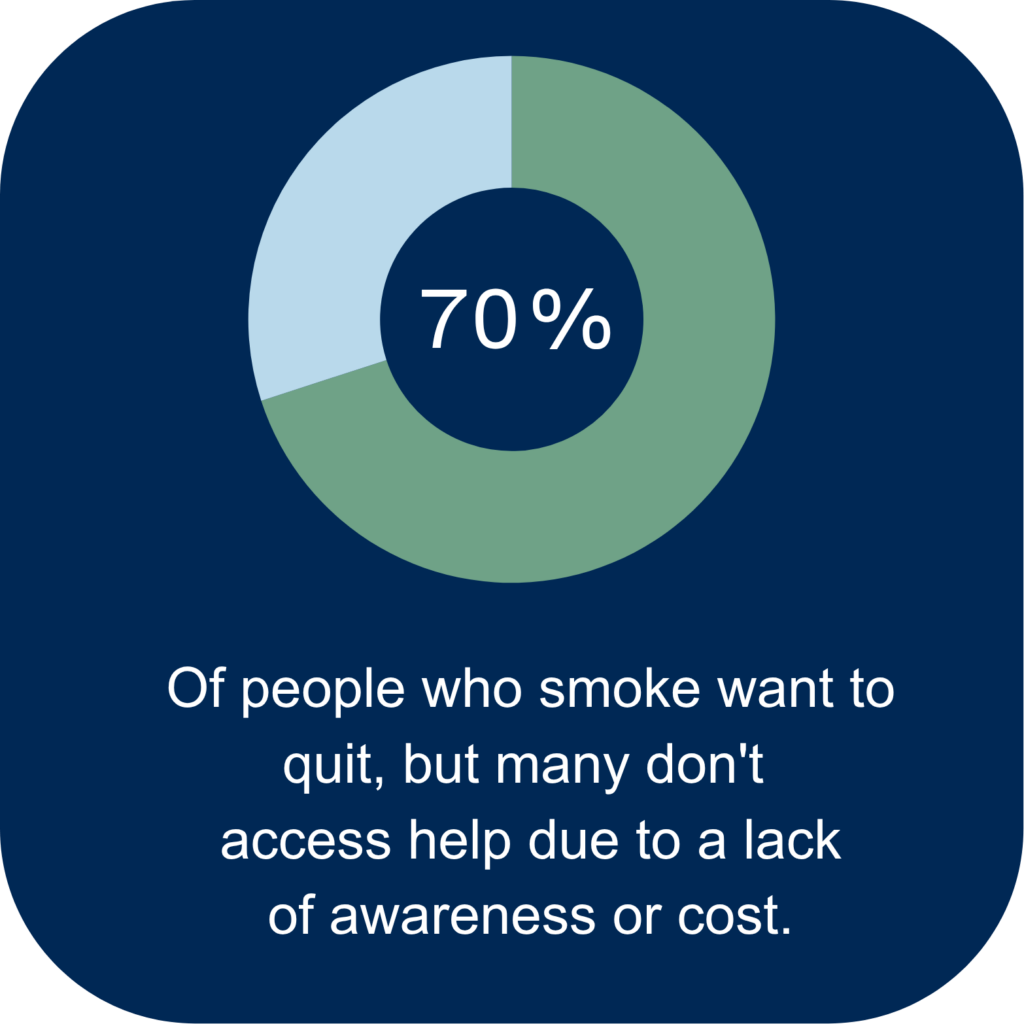
Coverage for tobacco cessation is important because it removes critical barriers that prevent people from getting the help they need to quit. Yet many insurance plans still fall short in offering the full range of recommended services.
Here’s why comprehensive cessation coverage matters:
Improves Quit Rates
People are more likely to quit successfully when they have access to comprehensive, evidence-based treatments including behavioral counseling and FDA-approved medications. Insurance coverage ensures these tools are available and affordable.
Reduces Financial Barriers
Without coverage, tobacco users may face out-of-pocket costs for cessation services. This discourages quit attempts especially among low-income populations and those on Medicaid or without insurance.
Lowers Healthcare Costs
Tobacco use drives up costs across the healthcare system. Providing cessation support is one of the most cost-effective interventions available, saving money for insurers, employers, and state Medicaid programs by preventing tobacco-related disease.
Expands Access to Those That Use Tobacco the Most
Certain populations such as, people with lower incomes, those with behavioral health conditions, and people with disabilities, are more likely to use tobacco and less likely to have access to treatment. Expanding coverage helps close these gaps.
Aligns with Public Health Guidelines
The U.S. Preventive Services Task Force and CDC recommend covering all nine evidence-based cessation treatments. Ensuring coverage meets these standards helps states align with national best practices.
The National Association of Chronic Disease Directors (NACDD) works with state and territorial tobacco control programs to strengthen insurance coverage for evidence-based tobacco cessation services. Supported by a five-year cooperative agreement from the CDC, this project focuses on expanding access to and coverage for proven cessation tools for people who use commercial tobacco products, especially those at highest risk.
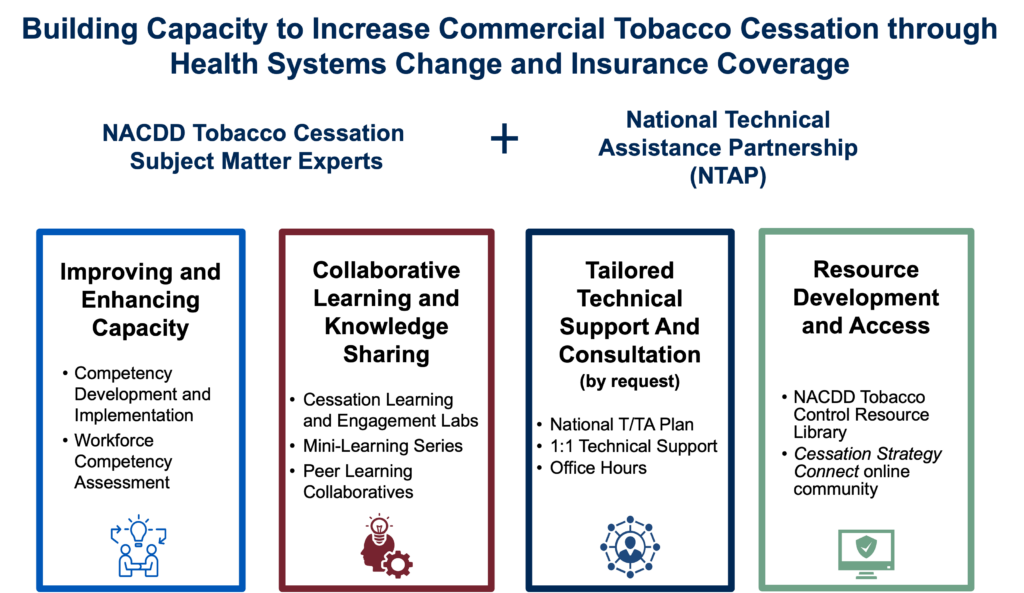
NACDD convenes subject matter experts in tobacco cessation and coverage to form a National Technical Assistance Partnership (NTAP). Together with the NTAP, NACDD supports tobacco control program staff and their partners in improving coverage policies, promoting benefits awareness, and reducing gaps in service utilization across all types of public and private insurance plans. The project provides training and technical assistance, peer learning, and resources for programs seeking to increase the reach, availability, and affordability of tobacco cessation treatment.
This framework provides an overview of strategies to build capacity for implementing evidence-based tobacco cessation through health systems change and improved insurance coverage. It supports state and territorial health departments and partner organizations by offering tailored training and technical assistance to strengthen tobacco cessation efforts.
Want to know what’s covered in your state? View the latest state-by-state breakdown of Medicaid tobacco cessation benefits:
CDC’s STATE System Medicaid Coverage of Tobacco Cessation Treatments Fact Sheet
Only 22 states currently provide all 9 medications and counseling with no barriers. Many states still impose unnecessary restrictions on tobacco cessation benefits.
You can help ensure coverage is comprehensive, accessible, and barrier-free.
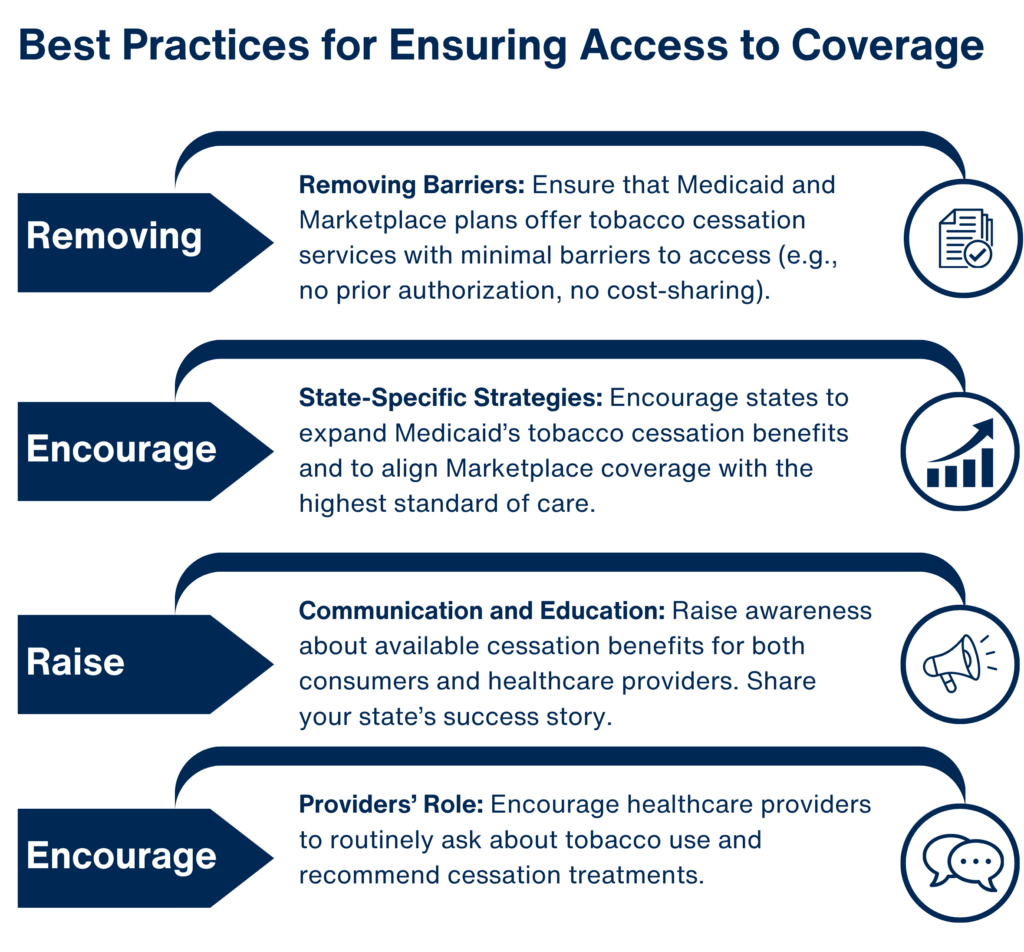
Based on U.S. Public Health Service Clinical Guidelines, ideal cessation coverage includes:
Comprehensive cessation coverage—free from barriers like copays and prior authorization—helps more people quit and stay quit.
The Coverage for Cessation program convenes a national technical assistance partnership (NTAP) and subject matter experts to help alongside state partners and public health leaders to improve coverage policies, promote benefits awareness, and reduce gaps in service utilization across all types of public and private insurance plans. The Coverage for Cessation program provides technical assistance, peer learning, and develops resources for programs seeking to increase the reach, availability, and affordability of tobacco cessation treatment.
Note: When NACDD refers to tobacco on this web page, we are referring to the use of commercial tobacco products and not the sacred and traditional use of tobacco by some American Indian communities.
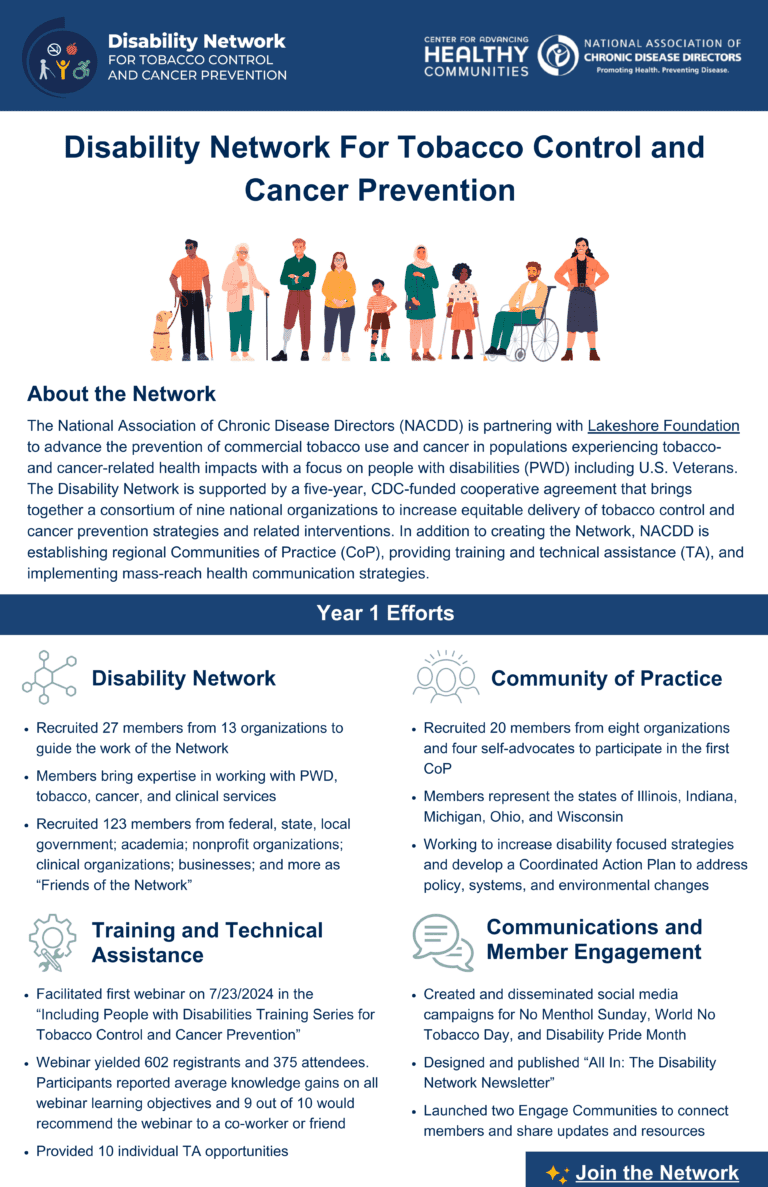
The Disability Network works to advance the prevention of commercial tobacco use and cancer in populations experiencing tobacco- and cancer-related health impacts with a focus on people with disabilities including U.S. veterans.
NACDD is proud to highlight the accomplishments of the Disability Network in its first year including the recruitment of 10 national organizations to its advisory board and the engagement of participants from six states (Illinois, Indiana, Michigan, Minnesota, Ohio, and Wisconsin) in a community of practice (CoP). These efforts aim to drive policy, systems, and environmental changes that enhance the lives of people with disabilities.
For inquiries and/or to learn more about NACDD’s Tobacco Control and Prevention portfolio, please email CAHCinfo@chronicdisease.org or complete this form.